ads
The digital relationships market moved over 3 billion dollars in 2024, completely transforming how people connect. But do we know all the possibilities? While giants dominate the headlines, a new generation of platforms is reinventing the rules of the love game.
The Empire of Giants: When the Algorithm Chooses For You
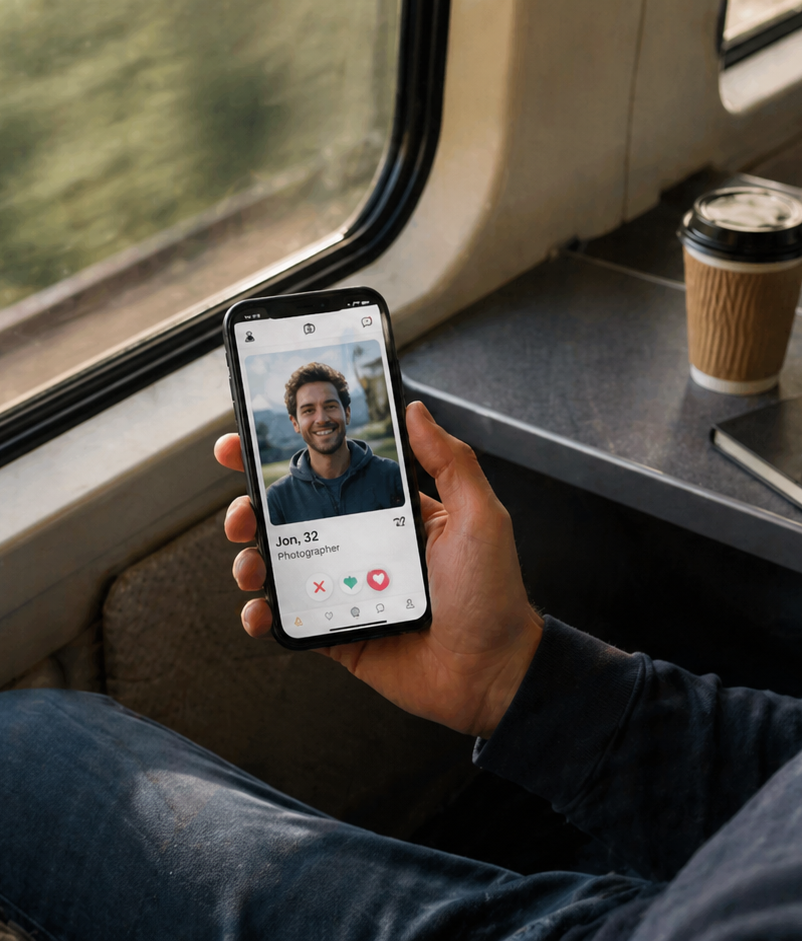
Tinder, Bumble, and Hinge built empires based on distinct but equally revolutionary premises. Tinder popularized the “swipe” that became synonymous with online dating – a gesture so simple it transformed the search for relationships into something like browsing through an infinite catalog of possibilities. With over 75 million monthly active users, the app proved that gamification of romance works.
Bumble arrived with a disruptive feminist proposal: only women can initiate conversations in heterosexual matches. This simple power inversion reduced inappropriate messages by 96% and created an environment where 63% of female users report feeling safer. Whitney Wolfe Herd didn’t just create an app – she redesigned the social dynamics of digital courtship.
Hinge adopted the slogan “designed to be deleted,” focusing on serious relationships through detailed profiles and creative prompts that go beyond superficiality. Its algorithm learns from each rejection, refining suggestions until finding genuine compatibilities.
The Math of Matching: How Algorithms Work
AppPrimary MethodMatch RateMain FocusTinderGeolocation + Visual preferences1-3%Casual encounters and relationshipsBumbleBidirectional swipe + Female first contact2-4%Balanced relationshipsHingeProfile compatibility + Specific interactions5-8%Serious relationshipsOkCupidExtensive compatibility questionnaire10-15%Matches by shared valuesCoffee Meets BagelLimited daily curation15-20%Quality over quantity
The Invisible Revolutionaries: Apps You Need to Know
While giants dominate, a constellation of innovative apps is redefining what it means to find someone online.
Thursday: The App That Only Works on Thursdays
Imagine a dating app that simply doesn’t exist six days a week. Thursday created artificial urgency – you can only use it on Thursdays, from 00:00 to 23:59. This planned scarcity generated surprising results: 72% of matches lead to real conversations and 41% result in in-person dates the same week. The “now or never” anxiety eliminates the digital procrastination that plagues other apps.
Feels: Dating Through Audio
Forget photos. Feels allows only voice messages and audio-profiles. No filters, no Photoshop, no digital masks – just genuine voices sharing stories. Users report 300% deeper connections in the first 24 hours compared to traditional apps. The intimacy of audio creates instant vulnerability.
ads
Snack: TikTok Meets Tinder
For Gen Z, short videos are the native language. Snack completely eliminated static photos, requiring videos of up to 30 seconds. Profiles become mini-documentaries where personality, humor, and energy replace studied photographic angles. With 400% growth in 2024, the app proves that authenticity in motion beats calculated poses.
Lolly: When Your Friends Choose For You
Lolly completely inverts the paradigm: you don’t build your own profile. Your friends do it for you, highlighting qualities you’d never admit to possessing. It’s collective matchmaking where those who truly know you become your digital cupid. The rate of lasting relationships is 60% higher than conventional apps.
Picnic: Planned Dates, Zero Small Talk
Picnic connects people based on shared interests and already schedules the date. No weeks exchanging generic messages. The algorithm suggests specific activities – a pottery class, wine tasting, morning hike – and coordinates both schedules. Conversations happen in person, not in digital bubbles.
Hyper-Specific Segmentation: Niches That Work
Muzmatch: Muslim Dating with Preserved Values
With 8 million users globally, Muzmatch proves that specificity works. The app allows virtual chaperones (as required by some Islamic interpretations), filtering by level of religiosity, and even verification that the family approves the match. Over 500,000 marriages have been facilitated by the platform.
Alike: For Neuroatypical Minds
Alike was created specifically for people on the autism spectrum. Profiles include information about sensory sensitivities, communication preferences, and predictability needs. It eliminates the social exhaustion that conventional apps cause in neurodivergent people. Every detail – from expected response speed to comfortable level of eye contact in photos – is customizable.
ads
Bristlr: Connecting Beards and Admirers
Yes, there’s a dating app exclusively for people with beards and those who love them. With over 100,000 users, Bristlr proves that any affinity can be the basis for community. Is it peculiar? Absolutely. Does it work? Perfectly for its audience.
The Science Behind Connections: What Really Matters?
Research from Stanford University reveals fascinating data about success in dating apps:
Factors that increase probability of lasting relationship:
- Initial messages with more than 50 words: +40% success rate
- In-person meeting within 7 days after match: +65% chances
- Profiles with information about specific hobbies: +52% compatibility
- Photos doing activities versus selfies: +38% genuine interest
- Demonstration of humor in first 3 messages: +71% second dates
The paradox of excessive choice: users who swipe on more than 50 profiles per day have 23% fewer chances of forming meaningful relationships. The brain in “catalog mode” deactivates deep evaluation mechanisms.
The Dark Side: When Algorithms Create Problems
Not everything is rosy in the digital garden. Dating apps face growing criticism:
The attention economy: platforms profit from active users, not satisfied users who delete the app. This creates perverse incentives where the algorithm may deliberately delay ideal matches to maintain engagement.
The impact on mental health: studies indicate that 78% of frequent dating app users report increased anxiety and 62% experience drops in self-esteem. The infinite cycle of silent rejection (no response) is psychologically exhausting.
Algorithmic discrimination: research proves that popular app algorithms amplify racial prejudices, disproportionately favoring profiles of certain ethnicities in top suggestions.
The Future: Where Digital Love is Heading
Virtual Reality and Immersive Encounters
Apps like Planet Theta are already experimenting with VR dates where personalized avatars interact in virtual environments before the physical meeting. Imagine a first date on Mars or in a 19th-century Parisian café – all without leaving home.
AI as Personal Matchmaker
Iris uses artificial intelligence that learns your preferences by analyzing photos you find attractive, completely eliminating manual swiping. The algorithm simply presents daily matches based on visual patterns your brain approves, even subconsciously.
DNA Verification and Chemical Compatibility
Pheramor analyzes your DNA and pheromones to find literal chemical compatibility. Based on research indicating that attraction has measurable genetic components, the app promises matches with laboratory-proven “chemistry.”
Strategies to Maximize Results: The Definitive Guide
Data-based profile optimization:
- First photo: face close-up with genuine smile increases matches by 76%
- Second photo: you doing a hobby/activity you love – shows personality
- Third photo: in social context (not group, you identifiable) – proves sociability
- Fourth photo: travel or adventure – suggests interesting lifestyle
- Fifth photo: pet (if relevant) – increases perception of empathy by 43%
Killer bio in 3 lines:
- Line 1: Who you are (profession/main passion)
- Line 2: What makes you unique (unusual hobby, talent, curiosity)
- Line 3: Call to action or intriguing question
Timing is everything: data reveals that swipes performed between 8pm-10pm on Sundays have 34% more probability of matching. Mondays at 9am are the worst time – everyone is in “work mode.”
The Authenticity Revolution: Anti-Filter Movement
A growing trend rejects digital perfectionism. Apps like BeReal inspired romantic versions where photos must be posted in real-time, without preparation. Hoop requires profiles to be updated weekly with genuine photos of daily life.
Interestingly, “imperfect” profiles perform 28% better in meaningful conversations. Calculated vulnerability – showing “nerdy” hobbies, admitting flaws with humor, unproduced photos – humanizes and attracts people seeking real connection.
Conclusion: Love in the Era of Digital Curation
Dating apps aren’t just tools – they’re mirrors of society, reflecting how we value connection, convenience, and authenticity. Giants will continue to dominate, but niche revolutionaries prove there’s room for radically different approaches.
The secret isn’t which app you use, but how you use it. Authenticity beats strategy. Vulnerability surpasses perfectionism. And in the end, algorithms can connect people, but only genuine humanity creates true love.
Maybe it’s time to rethink your approach – or try that peculiar app that seems made especially for you. After all, in the infinite universe of digital possibilities, your ideal person might be just one different swipe away.